
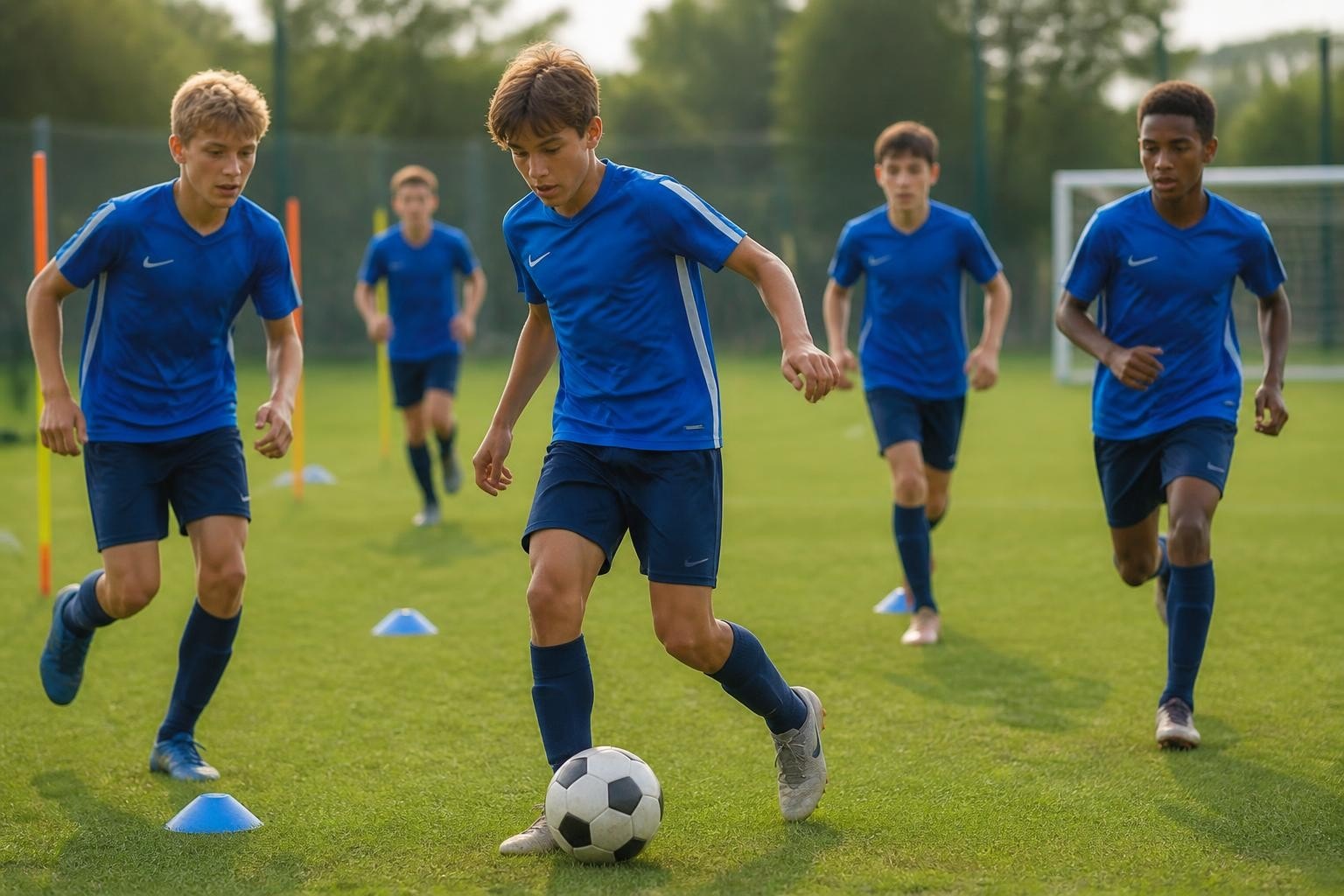
Youth soccer camps have evolved significantly in recent years, transforming from simple recreational activities into comprehensive development programs that shape young athletes both on and off the field. Parents searching for camps soccer opportunities in 2026 face more choices than ever before, making it essential to understand what distinguishes a quality program from a basic camp experience. The right soccer camp can accelerate skill development, build confidence, and instill values that extend far beyond the pitch, while the wrong choice may simply burn time and money without meaningful growth.
Understanding the Modern Camps Soccer Landscape
The soccer camp industry has undergone a complete transformation over the past decade. Traditional camps once focused primarily on keeping kids active during summer break, but today's camps soccer programs incorporate sophisticated training methodologies borrowed from European academies and professional development systems.
Modern camps soccer experiences prioritize four fundamental pillars of player development:
- Technical proficiency: Ball mastery, passing accuracy, shooting technique, and individual skills
- Tactical awareness: Understanding positioning, reading the game, and making intelligent decisions
- Physical conditioning: Speed, agility, endurance, and strength appropriate to age groups
- Psychological resilience: Confidence building, handling pressure, and developing a growth mindset
What Parents Should Look for in Quality Programs
When evaluating camps soccer options, parents must dig deeper than flashy marketing materials and impressive facility photos. The coaching credentials matter significantly. Look for programs led by licensed coaches through recognized soccer federations, as these professionals have undergone rigorous training in both technical instruction and age-appropriate teaching methods.

The structure of daily sessions reveals much about a program's quality. Effective camps balance different training components throughout each session rather than simply running drills for hours. A typical high-quality camp day includes dedicated time for technical work, small-sided games for tactical development, and age-appropriate physical conditioning.
Age-Specific Development Through Camps Soccer
Different age groups require vastly different approaches to soccer development. A camps soccer program designed for 6-year-olds should look nothing like one designed for teenagers, yet many generic camps fail to make these crucial distinctions.
Youth Players (Ages 5-8)
For the youngest participants, camps soccer experiences should emphasize fun and fundamental movement skills. At this stage, technical development focuses on:
- Basic ball familiarity and comfort
- Simple dribbling patterns
- Introduction to passing with both feet
- Developing spatial awareness through games
The psychological component centers on building positive associations with soccer and physical activity. Sessions should be fast-paced with frequent activity changes to match short attention spans.
Developing Players (Ages 9-12)
This age range represents a critical window for technical skill acquisition. Quality camps soccer programs for this group intensify individual skill development while introducing more complex tactical concepts.
| Training Component | Focus Areas | Session Time Allocation |
|---|---|---|
| Technical Skills | First touch, passing combinations, 1v1 moves | 40% |
| Tactical Understanding | Positioning, support play, transitions | 30% |
| Small-Sided Games | Apply skills in realistic scenarios | 25% |
| Physical Development | Agility, coordination, speed fundamentals | 5% |
Players at this stage benefit enormously from video analysis and detailed feedback that helps them understand not just what to do, but why certain decisions work better than others.
Advanced Players (Ages 13+)
Teenage participants in camps soccer programs need training that mirrors professional environments. These athletes can handle longer sessions, more complex tactical instruction, and higher physical demands. Programs like Soccer High Performance Training provide 90-minute high-intensity sessions designed to push technical skills, decision-making speed, and game awareness to the next level.
The Science Behind Effective Soccer Camp Training
Understanding how young athletes learn and develop skills helps parents recognize quality camps soccer programs. Motor learning research demonstrates that skill acquisition requires specific types of practice structured in particular ways.
Repetition with Variation
Elite camps soccer programs incorporate massive repetition of fundamental techniques but introduce variation to prevent boredom and develop adaptability. A player might practice passing hundreds of times during a week-long camp, but through different exercises, angles, distances, and pressure situations.
Key principles include:
- High volume of touches on the ball (studies suggest 1,000+ per session)
- Progressive difficulty as players demonstrate competence
- Realistic game-like scenarios rather than static drills
- Immediate feedback on technique and decision-making
- Opportunities to apply skills in competitive situations
The Role of Small-Sided Games
Research consistently shows that small-sided games (3v3, 4v4, 5v5) provide superior development opportunities compared to traditional full-sided matches for youth players. Quality camps soccer experiences dedicate significant time to these formats because they offer more touches, more decision-making moments, and more opportunities to apply skills under pressure.
Beyond Skills: Character Development in Camps Soccer
The best camps soccer programs recognize that athletic development and character development are inseparable. Young athletes who attend quality camps learn values and behaviors that serve them throughout life.
Building Resilience Through Challenge
Properly structured camps soccer experiences place players slightly outside their comfort zones. This controlled challenge environment teaches resilience as players struggle with new techniques, face skilled opponents, and sometimes fail before succeeding.
Coaches create this environment by:
- Setting achievable but demanding goals for each session
- Normalizing mistakes as part of the learning process
- Celebrating effort and improvement, not just outcomes
- Providing constructive feedback that guides without discouraging
Teamwork and Communication Skills
Soccer inherently requires collaboration, and quality camps amplify these lessons through intentional coaching. Players learn to communicate effectively with teammates, adapt their play style to complement others, and subordinate individual glory to team success.
Measuring Progress and Long-Term Development
Parents investing in camps soccer programs naturally want to see tangible results. The best programs implement structured assessment systems that track player development across multiple dimensions.
Technical Assessment Frameworks
Professional camps use standardized testing to measure technical proficiency in areas like:
| Skill Category | Assessment Methods | Benchmarking |
|---|---|---|
| Ball Mastery | Timed dribbling courses, juggling counts | Age-appropriate standards |
| Passing Accuracy | Target passing under time pressure | Percentage completion rates |
| Shooting | Power and placement measurements | Comparison to peer group |
| First Touch | Control quality in dynamic scenarios | Coach evaluation rubrics |
These objective measurements complement subjective coach evaluations to provide a complete picture of player development.
Creating Development Plans
The most valuable camps soccer programs don't end when the final session concludes. Quality programs provide parents and players with detailed development plans identifying strengths to leverage and areas requiring focused improvement. These plans should include specific exercises players can practice independently and recommendations for continued training.
Seasonal Considerations for Soccer Camps
The timing of camps soccer participation can significantly impact the developmental value players receive. Understanding how different seasons align with player needs helps parents make strategic choices about when to invest in intensive camp experiences.
Summer Camps: Extended Development Blocks
Summer represents the traditional camps soccer season for good reason. The extended break from school allows for week-long or multi-week intensive programs that create significant skill jumps. Players can train at higher volumes than possible during the school year, and the consecutive days allow coaches to build progressively on previous sessions.
Summer camps work particularly well for:
- Players transitioning between age groups who need to close skill gaps
- Athletes preparing for competitive team tryouts in fall
- Young players requiring extended time to master fundamental techniques
School Break Intensives
Spring break and winter break camps offer concentrated training blocks that maintain development momentum during the school year. These shorter camps soccer experiences typically focus on specific skill sets or tactical concepts rather than comprehensive development.
Selecting the Right Camp Environment
The physical and social environment of camps soccer programs influences learning and enjoyment significantly. Parents should consider several environmental factors when evaluating options.
Facility Quality and Safety
Training facilities should offer appropriate surfaces (quality grass or turf), adequate space for multiple simultaneous activities, and proper safety features including first aid availability. Indoor options provide weather backup and year-round training possibilities, though outdoor sessions develop additional skills like reading bounces on natural surfaces.
Player-to-Coach Ratios
The optimal ratio varies by age and skill level, but quality camps soccer programs maintain small enough groups that each player receives individual attention and feedback. Generally, ratios should not exceed:
- Ages 5-8: Maximum 8 players per coach
- Ages 9-12: Maximum 12 players per coach
- Ages 13+: Maximum 16 players per coach
Skill-Level Grouping
Mixed-ability groups can work in recreational contexts, but serious development requires grouping players by similar skill levels. This allows coaches to pitch instruction appropriately and ensures players face suitable challenges. Parents should verify that camps assess players and create appropriate groups rather than simply dividing by age.
Financial Investment and Value Assessment
Camps soccer programs vary dramatically in cost, from affordable community programs to premium academy experiences. Understanding what drives these price differences helps parents make informed decisions aligned with their developmental goals and budgets.
Cost Factors in Premium Programs
Higher-priced camps soccer experiences typically justify costs through:
- Elite coaching credentials and professional playing experience
- Lower player-to-coach ratios enabling personalized instruction
- Superior facilities and equipment
- Comprehensive development tracking and assessment
- Extended session hours and additional training components
The question isn't whether premium camps cost more, but whether the additional investment produces proportionally greater development for your specific child.
Evaluating Return on Investment
Smart parents assess camps soccer ROI by examining multiple factors beyond immediate skill improvement. Consider the value of exposure to high-level coaching philosophies, relationships with skilled peer groups, and character development opportunities alongside technical progress.
Programs at Strive Soccer Academy demonstrate how comprehensive approaches deliver value across all four pillars of player development rather than just technical skills.
Common Mistakes Parents Make with Soccer Camps
Even well-intentioned parents sometimes undermine the value of camps soccer experiences through common mistakes that limit their child's development or enjoyment.
Over-Scheduling and Burnout Risk
The availability of year-round camps soccer options tempts some parents to pack their child's schedule with continuous intensive training. However, young athletes require recovery periods both physically and mentally. Over-scheduling leads to:
- Increased injury risk from insufficient recovery
- Mental burnout and declining motivation
- Reduced effectiveness of training as fatigue accumulates
- Loss of time for unstructured play that develops creativity
Misaligning Camp Selection with Child's Goals
Parents must honestly assess whether their child seeks recreational fun, serious skill development, or elite competitive preparation. Placing a recreational player in an ultra-competitive camps soccer environment creates frustration, while enrolling a driven athlete in a purely recreational camp wastes developmental time.
Neglecting Year-Round Development
Camps provide concentrated learning opportunities but cannot replace consistent year-round training for serious players. The most common pattern among developing elite players involves regular academy or club training supplemented strategically with camps soccer experiences, not camps as the primary development vehicle.
Integration with Long-Term Player Pathways
Parents should view camps soccer participation as one component within a comprehensive long-term development pathway rather than isolated experiences. Understanding how camps fit into the broader development picture enables strategic planning.
Complementing Academy and Club Training
For players involved in academy programs or competitive clubs, camps soccer experiences should complement rather than duplicate their regular training. Ideal camps address specific areas less emphasized in regular programming or provide exposure to different coaching philosophies and methodologies that broaden player understanding.
Bridging Seasonal Transitions
Strategic camp timing helps players navigate transitions between seasons, age groups, or competitive levels. A focused technical camp before tryouts can make the difference in making a higher-level team. Similarly, tactical camps during off-seasons keep game understanding sharp when regular team training pauses.
Maximizing Camp Value Through Preparation and Follow-Up
The development benefits of camps soccer experiences extend far beyond the hours spent on the field when parents and players approach camps strategically.
Pre-Camp Preparation
Players arrive at camps with widely varying fitness levels, technical baselines, and mental readiness. Those who prepare in advance extract significantly more value. Simple preparation steps include:
- Maintaining fitness during weeks before camp
- Reviewing fundamental techniques through online resources
- Setting specific personal goals for the camp experience
- Ensuring proper equipment is ready and in good condition
Post-Camp Practice and Application
The forgetting curve threatens skill retention when players don't practice newly acquired techniques after camps conclude. Creating a simple practice schedule for the weeks following camps soccer experiences reinforces learning and transitions camp skills into permanent capabilities.
Parents can support this process by:
- Reviewing coach feedback and development notes with players
- Scheduling regular practice sessions (even 20 minutes helps)
- Encouraging application of camp concepts during regular team play
- Celebrating improvement markers achieved through post-camp practice
Regional Variations and Local Opportunities
The camps soccer landscape varies significantly by region, with different areas offering different strengths and specializations. Parents benefit from understanding their local market while remaining open to exceptional opportunities that may require travel.
Evaluating Local Options
Begin by thoroughly researching camps soccer programs in your immediate area. Local programs offer logistical advantages and often strong community connections. Many excellent programs operate without extensive marketing, so investigate beyond the first page of search results. Connect with other soccer parents, coaches at your child's current club, and check with local soccer organizations for recommendations.
When to Consider Travel Programs
Certain situations justify investing in travel to distant camps soccer experiences. Elite players preparing for high-level competitive opportunities may benefit from exposure to top-tier coaching and competition unavailable locally. Additionally, specialized camps focusing on specific positions or advanced tactical concepts may only exist in certain regions.
Selecting the right camps soccer experience requires balancing numerous factors including coaching quality, developmental approach, cost, and alignment with your child's goals and current skill level. The most valuable programs develop technical abilities while building tactical understanding, physical capabilities, and psychological resilience through structured, age-appropriate training delivered by qualified coaches. Strive Soccer Academy brings European-style training philosophy to Surrey, BC, focusing on comprehensive player growth across technical, tactical, physical, and psychological dimensions with fully licensed coaches ranging from National A Licenses to Soccer for Life certifications, creating the development environment that helps young athletes reach their full potential.


