
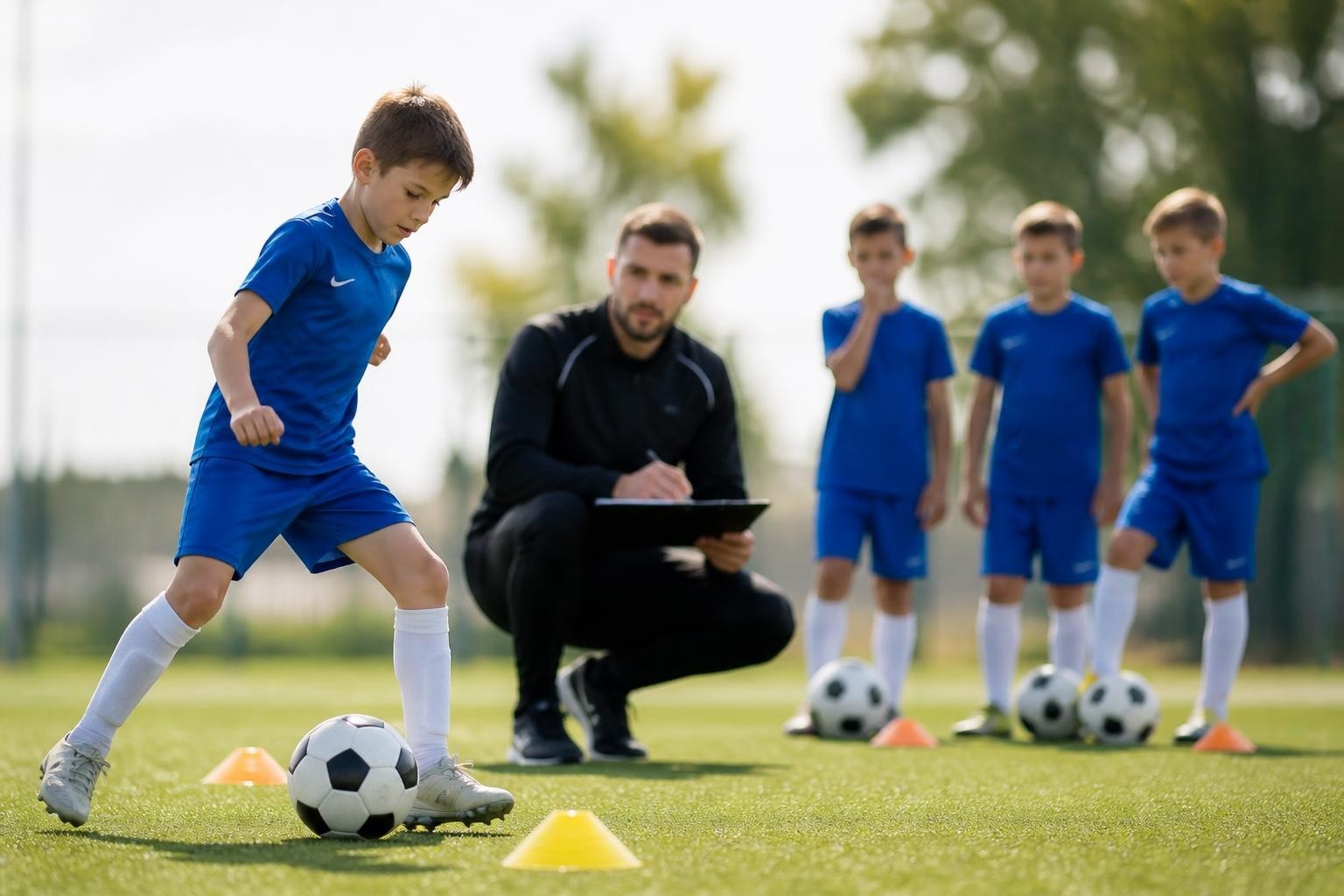
Youth sports have evolved dramatically over the past decade, and nowhere is this more evident than in the structured, progressive world of academy coaching. Parents today seek more than recreational activities for their children; they want comprehensive development programs that nurture talent while building character. Academy coaching represents a systematic approach to player development that addresses technical mastery, tactical understanding, physical conditioning, and mental resilience. This methodology, rooted in European training philosophies and adapted for North American contexts, provides young athletes with the foundation they need to reach their full potential on and off the field.
Understanding the Academy Coaching Model
Academy coaching differs fundamentally from traditional youth sports programs. Rather than focusing solely on winning games or keeping children entertained, academy coaching emphasizes long-term player development through age-appropriate, progressive training methodologies.
The foundation of effective academy coaching rests on four interconnected pillars that guide every training session:
- Technical Development: Ball mastery, first touch, passing accuracy, and position-specific skills
- Tactical Awareness: Understanding positioning, movement patterns, and decision-making under pressure
- Physical Conditioning: Age-appropriate strength, speed, agility, and endurance training
- Psychological Growth: Mental toughness, resilience, teamwork, and emotional regulation
This holistic framework aligns with the Long-Term Development model used across Canadian sports organizations. Rather than pushing young athletes too hard too soon, academy coaching recognizes that different ages require different training focuses and intensities.

The Role of Licensed Professional Coaches
The quality of academy coaching depends entirely on the expertise and qualifications of the coaching staff. Professional academies invest heavily in hiring coaches who hold recognized certifications and continue their education throughout their careers.
Licensed coaches bring several critical advantages to player development:
- Structured curriculum design based on proven training methodologies
- Age-appropriate progressions that match physical and cognitive development stages
- Evidence-based training techniques validated by sports science research
- Safeguarding knowledge to protect young athletes from injury and abuse
- Professional accountability through governing body standards and oversight
In Canada, the pathway from grassroots to elite coaching requires extensive study and practical experience. Coaches progress through various certification levels, each demanding deeper knowledge of player development, training periodization, and sports psychology. UEFA’s coaching licence structure provides a global benchmark that many North American programs now emulate, ensuring coaches understand international standards of excellence.
The investment in qualified coaching staff directly impacts player outcomes. Research on talent development environments demonstrates that the quality of coaching relationships and the social environment created by skilled coaches significantly influence whether young athletes continue participating in sports and reach higher competitive levels.
Building Technical Excellence Through Progressive Training
Technical mastery forms the cornerstone of academy coaching. Young players need hundreds of hours of deliberate practice to develop the ball control, passing accuracy, and decision-making speed required at higher competitive levels.
Structured Technical Progressions
Effective academy coaching breaks down complex skills into manageable components that players master sequentially. A well-designed technical training curriculum typically follows this progression:
| Age Group | Technical Focus | Training Methods |
|---|---|---|
| U8-U10 | Ball mastery, first touch, basic passing | Fun-based learning, small-sided games, individual skill work |
| U11-U13 | Passing combinations, receiving under pressure, 1v1 moves | Repetition drills, position-specific work, game-realistic scenarios |
| U14-U16 | Advanced techniques, speed of play, technical execution under fatigue | High-intensity sessions, tactical integration, performance analysis |
| U17+ | Position mastery, creative problem-solving, elite-level execution | Individualized programs, strength integration, mental rehearsal |
The emphasis shifts as players mature. Younger athletes benefit from exploratory learning through small-sided games that maximize touches and decision-making opportunities. Older players require more specialized, position-specific training that mirrors the demands of competitive matches.
Academy coaching also recognizes the importance of repetition without monotony. Skilled coaches design training sessions that revisit fundamental techniques in varied contexts, ensuring players develop automaticity without losing engagement or motivation.
Tactical Development and Game Intelligence
While technical skills provide the tools, tactical understanding determines how effectively players use those tools during competition. Academy coaching develops game intelligence through carefully structured learning experiences.
Progressive Tactical Concepts
Tactical education in academy coaching follows a deliberate sequence:
- Individual tactics: Body positioning, scanning, 1v1 defending and attacking
- Small group tactics: Combination play, support angles, pressing triggers
- Team tactics: Formation understanding, transition moments, set-piece execution
Young players initially struggle with the cognitive demands of reading the game while executing technical skills. Academy coaching addresses this challenge by creating training environments that gradually increase decision-making complexity. Coaches might begin with unopposed drills where players execute patterns, then add passive defenders, and finally progress to fully competitive scenarios.
Video analysis has become an invaluable tool in modern academy coaching. Players who review their performance footage develop faster tactical awareness, recognizing positioning errors and decision-making patterns they cannot perceive in real-time during matches.
The tactical component also includes understanding different playing philosophies. European-style training typically emphasizes possession-based play, quick transitions, and positional fluidity. North American programs increasingly adopt these approaches while maintaining aspects of the direct, athletic style traditionally favored in this region.
Physical Development in Academy Settings
Physical conditioning for youth athletes requires careful calibration. Academy coaching must develop athletic qualities while respecting developmental stages and avoiding early specialization injuries.
Evidence-Based Strength and Conditioning
Modern sports science has debunked many myths about youth physical training. Research on youth resistance training confirms that properly designed strength programs safely improve performance and reduce injury risk in adolescent athletes.
Academy coaching integrates physical development through several methods:
- Movement literacy: Teaching fundamental movement patterns before adding load or complexity
- Speed and agility work: Developing multi-directional movement capacity and acceleration mechanics
- Strength training: Age-appropriate resistance exercises that build muscular endurance and power
- Energy system development: Conditioning that matches the intermittent high-intensity demands of soccer
A comprehensive conditioning program for soccer addresses both general athletic development and sport-specific fitness. Younger players focus on coordination, balance, and basic strength, while older athletes progress to more sophisticated programs targeting positional demands and individual physical profiles.
Injury prevention represents another crucial element of physical development in academy coaching. Programs incorporate proper warm-up protocols, cool-down routines, flexibility work, and load monitoring to minimize overuse injuries that plague youth athletes who train intensively year-round.
Psychological Support and Mental Skills Training
The psychological dimension of academy coaching has gained prominence as organizations recognize that mental skills differentiate good players from great ones. Developing resilience, focus, and emotional regulation requires intentional coaching strategies.
Building Mental Toughness
Academy coaching cultivates psychological strength through several approaches:
- Goal-setting frameworks that help players set process-oriented objectives
- Performance routines that anchor focus and reduce pre-competition anxiety
- Growth mindset culture that frames mistakes as learning opportunities
- Visualization techniques that improve skill retention and competitive confidence
- Stress inoculation through graduated exposure to pressure situations
Coaches serve as role models for emotional regulation. How they respond to player mistakes, referee decisions, and competitive outcomes shapes the psychological development of young athletes. Effective academy coaching maintains high standards while creating psychologically safe environments where players feel supported in taking risks and learning from failures.
The social environment matters tremendously. Research on talent development shows that peer relationships, coach-athlete rapport, and organizational culture significantly influence whether talented players persist through the inevitable setbacks of athletic development.
Safeguarding and Ethical Coaching Practices
Academy coaching carries significant responsibility. Organizations working with youth athletes must implement robust safeguarding measures to protect players from physical, emotional, and psychological harm.
Professional academies establish comprehensive policies addressing:
| Safeguarding Area | Key Considerations |
|---|---|
| Safer recruitment | Background checks, reference verification, ongoing monitoring |
| Training standards | Minimum safeguarding competencies for all staff |
| Supervision protocols | Adult-to-player ratios, transparency in communications |
| Reporting mechanisms | Clear pathways for raising concerns, whistleblower protection |
| Physical contact | Guidelines for appropriate coaching touch, demonstration boundaries |
Safeguarding guidance emphasizes that protection goes beyond preventing abuse. It includes creating environments where young athletes develop healthy relationships with competition, avoid burnout, and maintain balanced lives outside sport.
Ethical academy coaching also means honest conversations with families about realistic pathways and expectations. Not every talented youth player will reach professional levels, and responsible coaches help families understand the value of athletic participation beyond elite achievement.
Selecting the Right Academy Program
Parents evaluating academy coaching programs should look beyond facilities and competitive results. Several key indicators reveal program quality:
Coaching credentials matter significantly. Programs employing fully licensed coaches with ongoing professional development demonstrate commitment to evidence-based training methodologies. Ask about coach certifications, staff turnover rates, and continuing education requirements.
Age-appropriate training ratios indicate whether programs prioritize individual development. Younger age groups should have smaller player-to-coach ratios, allowing more individualized attention during skill acquisition phases.
Holistic development emphasis separates quality academies from purely results-focused programs. Does the organization discuss character development, academic support, and life skills alongside technical training? Programs that measure success only by win-loss records may compromise long-term player development.
Transparent pathways help families understand progression opportunities. Effective academy coaching provides clear information about advancement criteria, realistic timelines, and connections to higher-level opportunities when appropriate.
Parents should also investigate the program's approach to multi-sport participation. While specialization has benefits at certain ages, research on early talent-promotion programs suggests that early single-sport specialization may increase injury risk and reduce long-term athletic development compared to diversified athletic experiences during childhood.
Training Intensity and Player Development
Academy coaching balances the need for challenging, high-quality training with the developmental reality that young athletes need recovery and variety. The optimal training load varies by age, competitive level, and individual player capacity.
High-performance environments like specialized soccer training programs create intensity through session design rather than simply increasing volume. Ninety-minute sessions can achieve exceptional training stimulus when structured around:
- High-tempo technical drills that demand quick execution and decision-making
- Small-sided games with specific tactical constraints that force problem-solving under pressure
- Competitive elements that replicate match intensity and psychological demands
- Adequate rest intervals that allow quality repetitions rather than fatigue-compromised practice
Effective academy coaching also periodizes training across seasons, recognizing that players need recovery phases, skill-building phases, and competition phases throughout the year. Programs that maintain identical training intensity year-round often produce burnout rather than breakthrough.
Individual player monitoring through training diaries, wellness questionnaires, and performance metrics allows coaches to adjust loads based on each athlete's response to training stress. This individualized approach represents a hallmark of professional academy coaching that separates it from one-size-fits-all recreational programs.
The Family Partnership in Academy Development
Academy coaching succeeds when families understand and support the developmental process. The most effective programs cultivate strong partnerships with parents through regular communication, education about age-appropriate expectations, and clarity about respective roles.
Parents contribute to academy success by:
- Reinforcing growth mindset at home and avoiding results-focused pressure
- Supporting nutritional needs that match training demands
- Ensuring adequate sleep to facilitate recovery and skill consolidation
- Maintaining academic standards that keep education as a priority
- Managing logistics that enable consistent training attendance
Conversely, parents undermine development when they coach from sidelines, criticize performance after matches, or pressure young athletes to specialize too early. Academy coaching staff should provide resources helping families navigate their supportive role while avoiding common pitfalls.
Regular parent education sessions create alignment between home and training environments. Topics might include understanding the long-term development model, recognizing signs of overtraining, or helping young athletes manage competitive anxiety. These initiatives demonstrate that quality academy coaching extends beyond on-field training to encompass the full ecosystem supporting player development.
Future Trends in Academy Coaching
The landscape of youth sports development continues evolving rapidly. Several trends will shape academy coaching in coming years:
Technology integration will expand beyond video analysis to include wearable sensors tracking physical load, biomechanical assessment tools identifying injury risk, and virtual reality platforms enabling tactical training. These technologies offer unprecedented insight into player development when used appropriately.
Mental health awareness will increasingly influence academy structures. Organizations will employ sport psychologists, implement mental wellness screening, and train coaches to recognize signs of anxiety, depression, or eating disorders in young athletes.
Individualized development pathways will replace rigid age-group structures in progressive programs. Coaches will use data and assessment to place players in training environments matching their developmental stage rather than chronological age alone.
Cross-sport collaboration will grow as research demonstrates the benefits of varied athletic experiences. Academy programs may partner with other sports organizations, encouraging multi-sport participation through middle adolescence before specialization.
The fundamental principles of quality academy coaching remain constant: qualified coaches, age-appropriate training, holistic development, and ethical practices. However, the methods and tools for implementing these principles will continue advancing as sports science, technology, and our understanding of youth development deepen.
Academy coaching represents the gold standard in youth athletic development, combining technical mastery, tactical intelligence, physical conditioning, and psychological growth through expert guidance. When parents seek comprehensive programs that develop not just skilled players but well-rounded young people prepared for whatever path they choose, professionally structured academy environments deliver unmatched value. Strive Soccer Academy brings this European-style academy coaching philosophy to Surrey, BC, with fully licensed coaches dedicated to developing technical, tactical, physical, and psychological excellence in every player. Discover how our commitment to holistic development can unlock your child's potential both on and off the field.


