
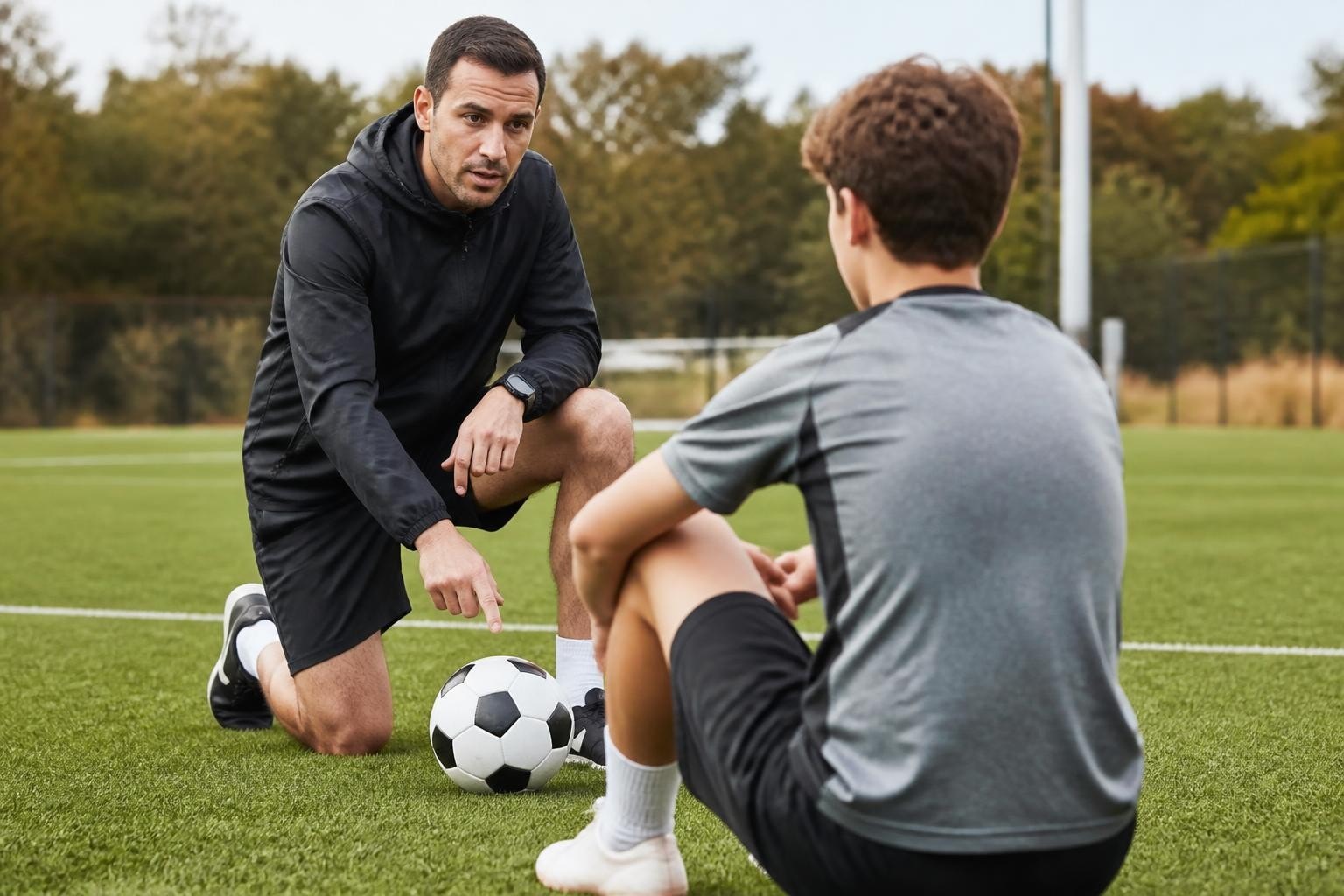
Every soccer player develops at their own pace, with unique strengths to leverage and specific areas requiring attention. While team training sessions provide essential group dynamics and competitive experience, individualized instruction allows coaches to address the precise needs of each athlete. This personalized approach has become increasingly recognized as a critical component in developing elite-level players who can compete at higher levels of the game.
Understanding the Value of Personalized Soccer Instruction
1 on 1 soccer coaching creates an environment where every minute of training time directly targets a player's development needs. Unlike group sessions where coaches must balance attention across multiple athletes, private instruction allows for immediate feedback, customized drill progressions, and focused skill refinement. This concentrated approach accelerates learning curves and builds confidence through mastery.
The European training philosophy emphasizes individual technical excellence as the foundation for team success. Licensed coaches can assess a player's movement patterns, decision-making processes, and psychological readiness with far greater precision during one-on-one sessions. Research on representative learning design demonstrates that tailoring practice environments to individual needs enhances skill transfer to competitive match situations.
Technical Development Through Individual Focus
Technical mastery requires thousands of purposeful touches and repetitions. 1 on 1 soccer coaching allows players to work through ball mastery sequences, receiving techniques, and striking mechanics without waiting in lines or sharing equipment. A coach can instantly correct foot positioning, body shape, or contact points, ensuring each repetition builds proper muscle memory.
Key technical areas addressed in individual sessions include:
- First touch control under various pressure scenarios
- Dominant and weak-foot development
- Dribbling patterns in tight spaces
- Passing accuracy over multiple distances
- Shooting technique from different angles
- Turning and shielding mechanics
The ability to design soccer training sessions around a player's specific technical gaps means faster improvement compared to general team practice. For instance, a midfielder struggling with receiving passes while facing their own goal can dedicate entire sessions to body positioning and scanning habits.

Tactical Intelligence and Decision-Making Skills
Beyond physical technique, soccer demands constant tactical decisions. Individual coaching sessions can simulate game scenarios where players practice reading defensive pressure, identifying passing windows, and understanding spatial relationships. This cognitive development often receives insufficient attention in crowded team training environments.
A licensed coach working one-on-one can pause play, rewind situations, and help players understand why certain decisions succeed or fail. This reflective practice builds the soccer IQ necessary for high-level competition. Players learn to recognize patterns, anticipate opponent movements, and execute under time pressure.
Building Game Awareness Through Guided Practice
| Tactical Component | Individual Session Benefit | Skill Development Outcome |
|---|---|---|
| Scanning frequency | Coach can count head checks and provide instant reminders | Improved situational awareness |
| Support angles | Immediate feedback on positioning relative to ball | Better team shape understanding |
| Penetrating passes | Risk-taking encouraged in controlled environment | Confidence in creative decisions |
| Defensive positioning | Coach can walk through body angles and pressure points | Sound defensive principles |
The psychological dimension of soccer training becomes particularly accessible during private instruction. Coaches can address confidence issues, fear of failure, or mental blocks without the social pressure of teammates watching. This safe learning environment encourages experimentation and risk-taking essential for growth.
Customizing Training Programs for Different Age Groups
1 on 1 soccer coaching must adapt to developmental stages. Young players between ages 6 and 10 benefit from sessions emphasizing fun, creativity, and basic coordination. Their technical work focuses on comfort with the ball through playful activities rather than rigid drill structures.
As players enter their teenage years, individual sessions can become more sophisticated. Research demonstrates that training variability and problem-solving tasks enhance skill acquisition in youth athletes. A National A License coach understands how to progress complexity while maintaining player engagement.
Age-appropriate individual session focuses:
- Ages 6-10: Ball mastery games, coordination activities, creative dribbling challenges
- Ages 11-14: Technical refinement, 1v1 situations, introduction to tactical concepts
- Ages 15-18: Position-specific training, advanced tactics, mental performance skills
- Ages 19+: Professional-level precision, tactical nuance, competitive mentality
The flexibility of private instruction means sessions can address immediate needs. If a player receives feedback from their club coach about weak-foot shooting, the next individual session can dedicate significant time to that specific skill. This responsive approach keeps training relevant and motivating.
Safety and Professional Standards in Private Coaching
When parents invest in individualized instruction, they rightfully expect professional standards and safe environments. All private coaching should follow established safeguarding protocols to protect young athletes. The U.S. Soccer Safeguarding Hub provides comprehensive guidelines that responsible coaches implement.
Proper credentialing matters significantly. Coaches offering 1 on 1 soccer coaching should hold current licenses from recognized governing bodies, maintain background checks, and complete ongoing education. United Soccer Coaches offers extensive resources for professional development that ensure coaches stay current with best practices.
Essential Professional Standards
- Current coaching licenses from Canada Soccer or equivalent governing bodies
- Completed background checks and clearance procedures
- Liability insurance coverage for individual sessions
- Clear communication protocols with parents
- Documented training plans and progress tracking
Parents should feel comfortable asking about credentials and training philosophy before committing to private instruction. Transparent coaches welcome these conversations and can articulate their developmental approach clearly.
Integrating Individual Training with Team Development
1 on 1 soccer coaching works best when coordinated with a player's team commitments rather than replacing them. Individual sessions address specific weaknesses while team training provides essential game context and competitive pressure. This complementary relationship maximizes development across all four pillars: technical, tactical, physical, and psychological.
Many families find that strategic individual coaching during the off-season or alongside soccer training programs accelerates progress. A player might work individually on finishing technique, then immediately apply those skills in team small-sided games. This rapid feedback loop reinforces learning.
Communication between private coaches and club coaches ensures aligned objectives. When everyone understands a player's development priorities, training becomes more coherent and effective. Some academies integrate individual attention within their broader programming specifically to maintain this alignment.
Measuring Progress and Setting Goals
Effective 1 on 1 soccer coaching includes regular assessment and clear goal-setting. Licensed coaches should establish baseline measurements for technical skills, track improvement over time, and adjust training plans accordingly. This data-driven approach keeps players motivated and parents informed about their investment's impact.
Progress measurement methods:
- Video analysis comparing technique before and after training blocks
- Quantified performance metrics like pass accuracy or shooting success rates
- Positional assessments from club coaches noting game performance improvements
- Player self-evaluations tracking confidence and understanding
- Regular parent-coach communication about observed development
Research on optimal feedback control suggests that coaches should provide precise, actionable feedback during skill acquisition. In individual sessions, this means not just identifying errors but explaining the correction and allowing immediate practice of the improved technique.
Physical Development and Injury Prevention
While technical and tactical growth receive primary focus, 1 on 1 soccer coaching sessions should incorporate age-appropriate physical conditioning. Young athletes benefit from movement literacy activities that build coordination, balance, and body control. Older players can integrate strength, speed, and endurance work tailored to their position and physical maturation.
Individual attention allows coaches to identify movement compensations or imbalances that might lead to injury. A coach noticing poor landing mechanics during jumping exercises can address the issue immediately, potentially preventing future problems. This preventive approach protects long-term athlete health.
| Physical Component | Individual Session Application | Development Benefit |
|---|---|---|
| Agility | Customized footwork patterns based on player needs | Improved change of direction |
| Speed | Sprint mechanics coaching with immediate feedback | Faster acceleration |
| Strength | Age-appropriate resistance exercises | Enhanced power output |
| Flexibility | Personalized mobility work | Reduced injury risk |
Understanding each player's growth stage ensures physical training remains appropriate. The UEFA coaching manual provides detailed guidance on matching physical demands to developmental readiness, principles that inform responsible individual coaching.
Creating Effective Session Structures
Well-designed individual sessions follow logical progressions that maximize learning. Most effective 1 on 1 soccer coaching sessions include a dynamic warm-up, technical work progressing from isolated to pressured conditions, tactical exercises, and competitive elements that test skills under fatigue.
A typical 60-minute individual session might allocate 10 minutes to movement preparation, 20 minutes to focused technical repetitions, 20 minutes to game-realistic applications, and 10 minutes to competitive challenges or conditioning. This structure maintains engagement while ensuring comprehensive development.
Effective session components:
- Movement preparation addressing mobility and activation
- Isolated technical work with high repetition quality
- Progressive pressure introduction challenging skill execution
- Small-sided game situations applying learned techniques
- Competitive finishes maintaining motivation and intensity
The ability to adjust pacing based on player energy and comprehension represents a key advantage of individual instruction. If a concept requires additional explanation or practice, the coach can extend that segment without worrying about keeping other players engaged.
Mental Skills and Confidence Building
1 on 1 soccer coaching provides unique opportunities to develop psychological resilience and competitive mentality. Players can discuss performance anxiety, fear of mistakes, or confidence struggles in a private setting where they feel safe being vulnerable. Coaches can then design training scenarios that gradually expose players to these pressure situations in controlled doses.
Building confidence requires success experiences at progressively challenging levels. Individual sessions can ensure players master foundational skills before advancing complexity, creating the competence that underlies genuine confidence. This scaffolded approach prevents the frustration that occurs when players face challenges beyond their current ability.
For players with competitive soccer ambitions, mental preparation becomes as important as physical skills. Visualization techniques, pre-performance routines, and self-talk strategies can all be practiced and refined during individual sessions. This mental training often determines performance differences when physical skills are relatively equal.
Maximizing Return on Investment
Families investing in private coaching naturally want to ensure effective use of resources. Maximizing the value of 1 on 1 soccer coaching requires player commitment to homework assignments, consistent session attendance, and applying learned skills during team training. The best results occur when players take ownership of their development.
Parents can support this process by maintaining realistic expectations, celebrating incremental progress, and avoiding comparisons to other players. Development timelines vary significantly based on biological maturation, training history, and individual learning speeds. Patience combined with consistent effort yields the best long-term outcomes.
Some players benefit most from intensive blocks of individual training targeting specific weaknesses, while others thrive with regular weekly sessions providing ongoing refinement. Working with a licensed coach to design an appropriate schedule ensures training frequency matches family resources and player needs. Programs like Soccer Skills Training often combine group and individual elements to optimize both cost-effectiveness and personalized attention.
Personalized instruction accelerates soccer development by targeting each player's unique needs across technical, tactical, physical, and psychological dimensions. The investment in quality 1 on 1 soccer coaching pays dividends through faster skill acquisition, deeper tactical understanding, and enhanced confidence that transfers directly to competitive performance. At Strive Soccer Academy, our fully licensed coaches bring European-style training philosophy to Surrey, BC, delivering the individualized attention and expert instruction your young athlete needs to reach their full potential. Our comprehensive approach develops not just skilled players, but confident, intelligent athletes prepared for the next level of competition.


